
6. Before and After
My Heart

December 2021
Stevens Pass, WA
It wasn’t a “snap” or a “crack.” It was more like a “pop”—or, no, a “knock.” It was like the sound of the temple blocks in the song “Sleigh Ride” —not the high of the two pitches, but the low one, and then muted—muted by flesh. As a singer, I pay a lot of attention to the resonance in my head, trying to optimize the overtones with the shape of my vocal tract. This “knock” had similar overtones, except it resonated not just in my skull but throughout my entire skeleton. I looked around, thinking everyone must have heard it.
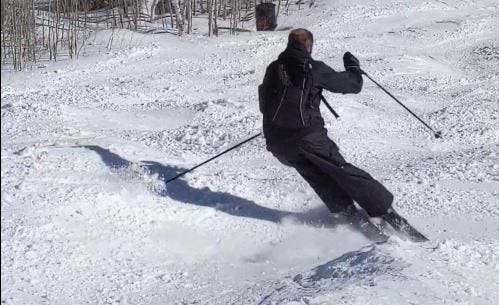
It was a sickening sound, but it wasn’t pain that made me queasy; it was the percussive finality of that violent crack in time—the divide between before that sound and after it, falling away from each other in estrangement.
Fall 2006
Chesapeake, VA
I tried screaming. It was not enough. I screamed louder. It was not enough. I screamed until the last of my breath was squeezed from my lungs, sucked in a gasping breath, and screamed more. It still did not express the feeling, exacerbated by every inch I drove from that house toward another house. There was a widening split in time between before dropping off my kids that night and after, like my soul was on a medieval rack—its limbs stretched, broken, severed. Tears were soaking my shirt by now, and it wasn’t enough. I needed blood. I needed to spit blood. I tore at my precious vocal cords with scream after endless scream, expecting to spit them onto the front windshield. It wasn’t enough.
I arrived at that empty house, where I would no longer put my kids to bed and tuck them in. I would no longer read them a story, and I would no longer gently wake them in the morning before leaving for work. Not like before. Not dependable as clockwork. Not as a stable, strong foundation for them. Not ever like that again. That time was behind me, and with every inch I drove from Nan and Pop’s house, where they would stay with their mother tonight, that time slipped further into an ungraspable past.
Children. They are helpless, innocent, unable to control their own environment. They need us, depend on us. They trust us. How can one put that innocent trust into words? That trust that is formed of the radiant, primordial light of pure love—completely out of time and as vast and luminescent as the universe. That trust had been betrayed—the first dark spot in the purity of my children’s love, and there was nothing I could do about it. I was helpless now. Their mother had decided. We were to be separate. The courts would spell it out: one night a week and every other weekend.
December 2021
Stevens Pass, WA
I pressed my lips together, sucked them between my teeth, and tasted blood. My forehead scrunched down, my eyes closed, and my chin began to shake. Oh no, no you don’t! I was about to sob, not from the physical pain, but because I could see clearly, as if she were standing right in front of me, the disappointment in my daughter’s face.
She was not standing in front of me, but at the bottom of this ski hill. I knew she was anxiously waiting to see how quickly I would stand up. So, I would damn well stand up. That’s when the pain hit.
Minutes before, we were riding on the chairlift together. She pointed below us and said, “Oooh, Dad. I want to see you ski down that!” She had such a free and excited grin on her face. She was bubbly, and I was so proud. So damn happy. Nicole was an adult now, living at college on her own. But that face contained my little girl—all that she had ever been, out of time, infinite. All the love I had ever felt radiated from that smile—in breathless freedom from troubles.
I had taught both my kids to ski (and their mother). We hadn’t skied much in Virginia, but now we had season tickets to Vail Resorts. I bought ski clothes and boots for my little girl. We had a full season ahead of us skiing together in the Rockies. Our first year in Colorado together. I bought a virtual ski bus—a Suburban with three rows of seats and three video screens for the long drives up to Vail, and they could bring their college friends. And this was just the warm-up trip. Stevens Pass, Washington. We were at my mom’s for Christmas. We had gone up one chairlift ride after another. Here, I could lead. I knew these runs so well that I could ski every turn of them in my imagination. They could look up to Dad here.
Of course I would ski it. It was nothing to me; I had done it a hundred times. We were at Barrier lift now, the red chair at Stevens Pass—or at least that’s what it’d been called when I was a kid. They had changed the name at some point, and I don’t know the new one. When you got off the chair, you could go to the right, where most went, toward a nicely groomed, easy slope. Or you could go to the left—less groomed, steeper, some slight moguls, sometimes a little icy. But there was also the “in between,” a little bowl under the chair between the two paths. It had a wonderful ledge at the top that dropped away from the right-side path. With enough speed, you could land a good distance down into the center of the bowl. This was never groomed—too steep—and the snow was crusty and chunky. No one liked it, but I always had.
I skated to build speed for the ledge. And then… air. Beautiful, silent air. My heart pulsed with the blood memory of thousands of soarings over decades. Weightlessness. Adrenaline. Freedom. Ecstasy!
God, skiing hadn’t changed. It was still just as exhilarating as it was when I was a teenager.
I hadn’t changed!
My skis touched the snow. I drove my knees forward into the turn that would bring the speed under control and began the game of catch with gravity. I had always said: The steeper the slope, the easier it is to ski. It is just a controlled fall.
Catch, release. Catch, release, with the ease of tossing a ball into the air. Catch, release.
Then the skis caught. My body continued down the hill, but the skis stayed. A sticky spot—but that shouldn’t have mattered. My skis had always followed my body as it continued its rapturous fall down the hill. Not this time. And my bindings were set to “expert,” of course, as always. They didn’t release.
Then the sound. The “pop.” The “knock.” My body plunged into the thick snow and came to a heavy, immutable stop. I didn’t move. I tried to delay the confirmation that would come with the pain of trying to move. But then I saw my kids at the bottom of the hill.
My legs were to the left of me. My left leg was on top; I grabbed it by the thigh and tugged it over, sliding it downhill from me. I winced, gritting my teeth. That was the most painful part. Once I had it straight across the fall line, it was better. I slipped my right ski into place above it and stood up. Once I was up, I could put weight on both skis. I just couldn’t rotate that left one or cause any resistance on the inside tip of that left ski.
All of that confirmed what had happened. I had ruptured my ACL. A complete blowout—gone. What I would not do was wait for a ski-patrol toboggan ride. When I was seventeen and had partially torn this same ACL, the toboggan ride was like the chariot ride of a hero returning from battle. It was cool. It would not be cool to my kids. I would ski down this hill on one leg, and I would make it look like two. It only hurt when I tried to turn with that left ski.
We made it to the bottom of the hill and to the ski patrol, where they made a cardboard splint for me and gave me ice for my knee. I was as buoyant as ever, joking with the ski patrol, joking with my kids. Looking back, it’s so strange. My entire plan had just collapsed. Skiing at Vail every weekend with my kids couldn’t happen—I had just ruined what I had dreamed about for years, what I had promised them, gotten them excited about.
I wonder now, do I get happier the more devastating a moment is? I should have expressed my regret and apologized for messing it all up, instead of laughing and joking. I hope they knew that I was sorry; I hope they knew how much it crushed me, even if I wasn’t able to show it. I wish my heart wouldn’t leave the room.
August 26, 2009
Song from the Archives
...And if my heart believes
Its thoughts are best unsaid…

Why does it force me to recall
Snuggles, hugs and kisses,
And stretched-out little arms
Pleading, “Daddy, carry me.”

I pray to God their hearts won’t break
In two like mine just did.
Please let them be too young to feel
The pain of a heart torn clean in two.

Please don’t ever let them
Doubt their daddy’s love,
Or ever for an instant believe
That Daddy ever wanted to leave.